Acupuncture vs dry needling: what's the difference?
Similar needles, different training and theory behind them. Here's what actually separates the two.
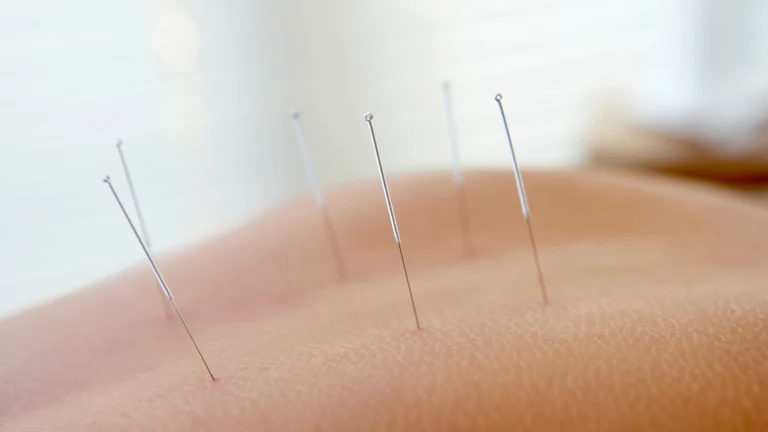
Dry needling targets a single muscle trigger point to release local tension. Acupuncture draws on a broader map of points along the body's meridians, treating pain alongside wider patterns like stress, sleep and digestion. The needles look similar. The training, theory and scope behind them don't.
Quick answer
- One stubborn trigger point: dry needling is direct and localised
- Chronic pain, stress, sleep or a whole-body pattern: Acupuncture is built for this
- Not sure: Sandra is trained in Acupuncture's full framework, so it's assessed properly either way
How each one actually works
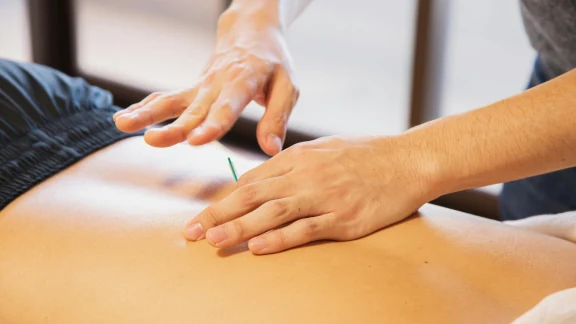
Dry needling inserts a fine needle directly into a myofascial trigger point, a taut band within a muscle that's stayed contracted and sore. The needle aims to trigger a local twitch response, a brief involuntary muscle contraction, which helps release the knot and reduce pain in that specific area. It's typically learned as a targeted, add-on skill focused on one muscle at a time.
Acupuncture is a full clinical discipline in its own right, rooted in Traditional Chinese Medicine. Needles are placed at specific points along the body's meridians to trigger natural pain relief and calm an overactive nervous system, but the point selection considers the whole picture, not just the sore muscle. That's why Acupuncture can address chronic pain, stress, sleep and digestive issues that dry needling, by design, isn't built to touch.
Acupuncture vs dry needling, side by side
| Dry needling | Acupuncture | |
|---|---|---|
| Target | A single myofascial trigger point in a muscle | A broader map of points along the body's meridians |
| Theory | Local twitch response releases muscle tension | Traditional Chinese Medicine, treating pain and systemic patterns together |
| Best for | One stubborn, localised muscle knot | Chronic pain, stress, sleep, digestion, and pain tied to a wider pattern |
| What it feels like | A brief cramp or ache as the muscle twitches | Usually a light tap, warmth or heaviness, often relaxing |
| Typical training | An add-on technique within a Physiotherapy or allied health scope | A standalone clinical discipline with its own diagnostic framework |
| Evidence base | Reasonable evidence specifically for trigger point pain | Broader and longer-standing, strongest for chronic pain, headaches and nausea |
Why we practise Acupuncture, not dry needling alone
Sandra is trained and accredited in full Acupuncture, not just trigger point dry needling. In practice, that means a session assessing a tight muscle can also address the wider pattern behind it, at no extra cost to you.
Book now- A local trigger pointNeedled directly, the same way dry needling would target it, with a local twitch response.
- The pattern behind itAdditional points address why the muscle keeps tightening, whether that's posture, stress or a compensating movement pattern.
- Combined with PhysiotherapyManual therapy and exercise to correct the mechanics that keep recreating the trigger point.
- Whole-body symptoms alongside itSleep, stress or digestive issues addressed in the same session if they're relevant to your recovery.
- Chinese Herbal MedicineLayered in when inflammation or a systemic pattern needs support from the inside too.
- Nothing added unnecessarilyIf a straightforward local release is genuinely all your condition needs, that's all we do.
How we decide what you need
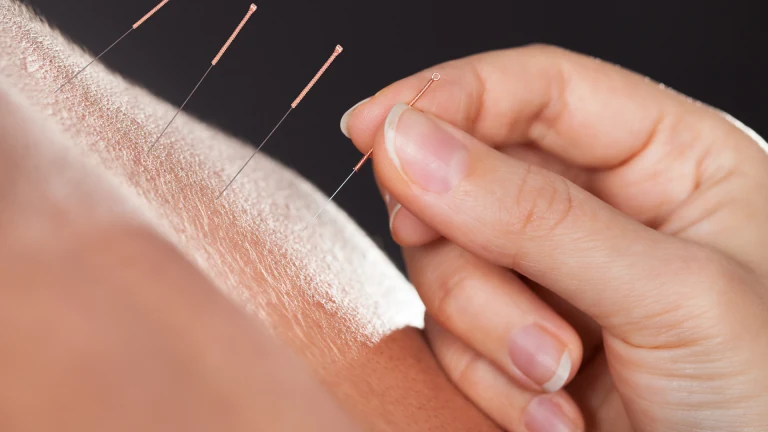
- We assess the muscle and the pattern
Checking whether this is an isolated trigger point or part of a wider issue.
- Full Acupuncture, applied where it counts
Local points for the immediate knot, broader points if the pattern calls for it.
- Reviewed as you progress
If it turns out to be a purely local issue, we keep it simple and targeted.
Is either safe?
Both are safe when delivered by a properly trained practitioner. Every needle used, for dry needling or Acupuncture, is single-use, sterile and disposed of after your session. Side effects are uncommon and usually mild: some light bruising at a needle site, or brief tiredness afterwards.
Needling around the chest or upper back carries a small, well-known risk of affecting the lung if depth and angle aren't controlled correctly, which is exactly why needling technique and anatomical knowledge matter more than which name is used for the treatment. A few situations need extra care generally: if you're pregnant, a small number of points are avoided, particularly in the first trimester; if you're on blood thinners or have a bleeding disorder, technique is adjusted accordingly.
Always tell your practitioner about pregnancy, medications or any bleeding condition before your first session. Neither is a substitute for urgent medical care: pain with unexplained weight loss, fever, numbness in the saddle area, or loss of bowel or bladder control needs medical assessment first.
At Holistic Physio, treatment always draws on the full discipline, not the narrower add-on version.
- Sandra is accredited by the Australian Acupuncture and Chinese Medicine Association
- 20+ years of clinical needling experience, local and systemic
- Trigger points treated with the same precision, plus the wider pattern considered
- Registered with all major health funds for Acupuncture
Our belief
A trigger point rarely exists in isolation. Treating the pattern gets you further than treating the point alone.
Good questions
The overlap between these two confuses a lot of people. Here's what actually matters.
Learn more about Acupuncture
Read the full detail on how we practise it.
What's the difference between Acupuncture and dry needling?
Both insert fine, sterile needles into the body, but the theory and training behind them differ. Dry needling targets myofascial trigger points, tight knots in a muscle, to release tension and reduce pain locally. Acupuncture is rooted in Traditional Chinese Medicine, using a broader map of points along the body's meridians to treat pain as well as systemic issues like stress, sleep and digestion, not just a single muscle.
Is dry needling the same as Acupuncture with a different name?
Not quite. They overlap in technique, both use similar needles, but come from different training pathways and target different things. Dry needling is typically learned as an add-on skill by physiotherapists focused on a specific muscle or trigger point. Acupuncture is a full clinical discipline in its own right, with its own diagnostic framework covering the whole body, not just the painful spot.
Which is better for a tight muscle or trigger point?
Both can effectively release a tight muscle knot. Dry needling is often the more direct, localised option when the issue is a single stubborn trigger point. Acupuncture achieves a similar local release while also addressing the wider pattern, useful when the tight muscle is one part of a larger issue like stress-related tension or a recurring injury.
Which is better for chronic pain, stress or sleep issues?
Acupuncture is generally the better fit here. Dry needling is designed around specific muscle trigger points, not systemic issues. Acupuncture's broader point selection and Traditional Chinese Medicine framework are built to address nervous-system-wide patterns like chronic pain, stress and sleep disturbance, not just one tight muscle.
Does dry needling or Acupuncture hurt more?
Both use needles far thinner than an injection needle. Dry needling aims for a local twitch response in the muscle, which can feel like a brief cramp or ache at the point of insertion. Acupuncture is generally felt as a light tap, warmth or heaviness, and is often described as more relaxing overall.
Is one more evidence-based than the other?
Dry needling has reasonable evidence specifically for myofascial trigger point pain. Acupuncture's evidence base is broader and longer-standing, strongest for chronic pain, tension headaches and nausea. Neither is a universal fix, and we're upfront about which claims are well-supported research and which are based on clinical experience.
Do I need a doctor's referral for either?
No, you can book directly. A referral is only required for WorkCover, Veterans' Affairs, CTP or a Medicare chronic condition management plan.
Can I claim either on my private health fund?
In most cases, yes. The clinic is registered with major health funds for Acupuncture, so most policies allow you to claim on the spot through HICAPS and just pay the gap. Check with your fund to confirm your level of cover.
Have a stubborn trigger point?
Call us to talk through your symptoms, or book an appointment and we'll assess what's right for you.
Tue 1:30–5:30pm
Thu 10am–6:30pm
Closed Wed, Fri, Sat & Sun
- Visit
- 26 Gladstone Rd (Cnr Brook St)
Highgate Hill Qld 4101On-site parking via Brook St - Call
- 07 3844 8202